

THE CREATIVE LIBRARY · 26 TITLES
Books
Original books and long-form projects across AI, history, philosophy, fiction, and technology. Explore the full library—all 26 titles remain active.
 Education · Nonfiction
THE EVIDENCE THEY IGNORED
What happens when classroom tradition outlasts the evidence against it? Beginning with Project Follow Through, this book examines the distance between educational research and everyday teaching—and asks who pays when attractive ideas survive results that should have changed minds.
The manuscript follows instructional evidence, teacher preparation, and the appeal of educational orthodoxies. Its central concern is practical: how choices made far from a classroom shape what children are actually taught.
Link to this book
 History · Nonfiction
CONFIDENTLY WRONG
The Dark Ages. The stories everyone knows. The explanations so familiar they no longer feel like claims. This collection revisits inherited historical certainties, tracing how memorable myths become common knowledge—and what comes into view when we stop repeating them.
Opening with the invention of the “Dark Ages,” the book looks at the motives behind familiar historical narratives and the evidence those narratives leave outside the frame.
Link to this book
 AI · Speculative ideas
P(doom)
A small probability can contain an enormous future. P(doom) turns toward the uncomfortable questions surrounding artificial intelligence, uncertainty, and survival: how do we think clearly about a danger whose scale may outrun both our experience and our imagination?
An exploration of existential risk and the difficulty of reasoning about unprecedented change. The project asks what responsibility looks like when neither confidence nor dismissal is enough.
Link to this book
 Technology · Society
THE SHAPE OF THE MACHINE AGE
Machines change more than the work we do. They reshape the world in which work, power, and identity make sense. This project explores the contours of an age being remade by intelligence and automation—and the human questions that refuse to disappear.
The focus is the relationship between technological change and human life: what we delegate, what we value, and how we recognize ourselves in the systems we build.
Link to this book
 History · Economics
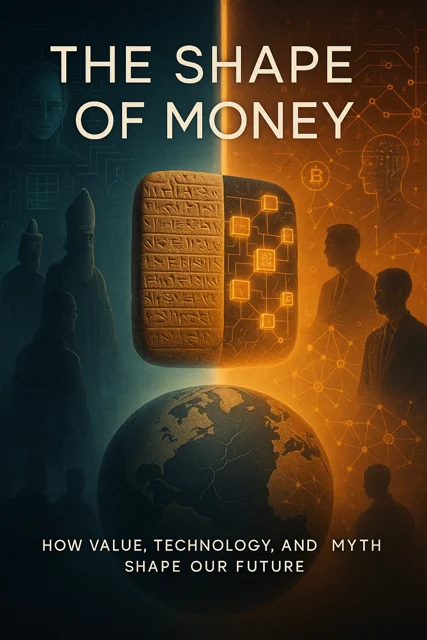
THE SHAPE OF MONEY
Before money was metal, it was meaning. From sacred objects to digital systems, this book follows the ways people remember, control, and reinvent value. Beneath the familiar language of exchange lies a stranger story about belief, memory, and power.
The opening moves from a scarab amulet to the stories societies tell about value. Money becomes a way to examine collective memory and the institutions that make a promise spendable.
Link to this book
 History · Civilization
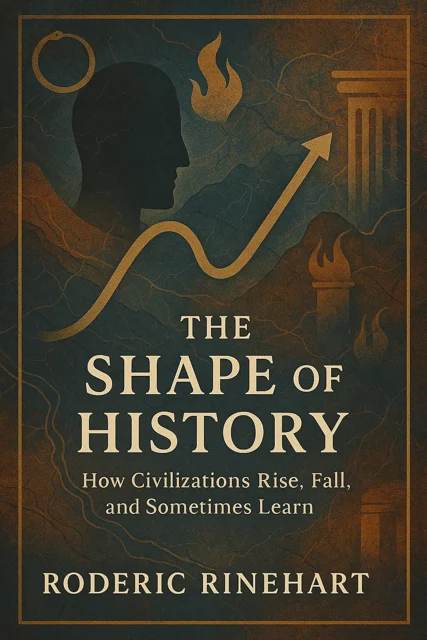
THE SHAPE OF HISTORY
History rarely travels in the straight line we draw for it. Civilizations fall, inherit, forget, and begin again. This book challenges the reassuring map of continuous progress, looking instead for the patterns that make human history feel both ancient and unfinished.
The manuscript frames historical change as a spiral rather than a simple march forward, asking what societies carry through collapse and what they fail to learn from survival.
Link to this book
 Geography · Philosophy
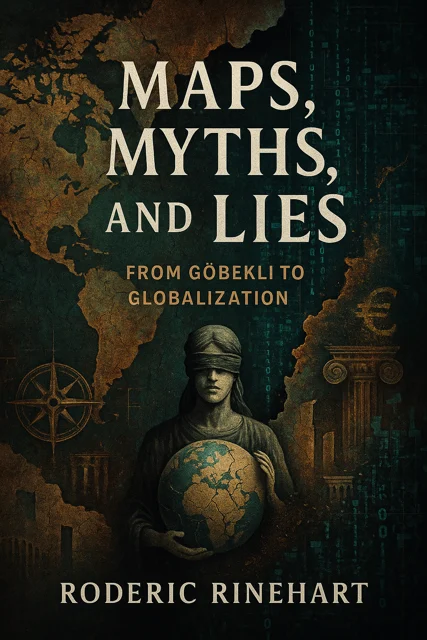
MAPS, MYTHS, AND LIES
Every map leaves something out. So do the stories that organize nations, money, and the self. A guide to recognizing patterns when old explanations stop working, this book asks who draws our maps—and how to navigate the spaces they conceal.
Geography, networks, civilizational change, and identity share the same question: when a useful model becomes a comfortable myth, how can we tell that the territory has changed?
Link to this book
 Philosophy · Aphorisms
TAKWIN PENSEE
Some ideas arrive as arguments. Others arrive as a sentence you cannot quite put down. These collected aphorisms move through knowledge, self-deception, suffering, time, and power, inviting the reader to pause where a familiar thought begins to turn against itself.
Five thematic movements travel from mind and knowledge through self, relationships, existence, and civilization. Read in sequence or enter anywhere: the short form leaves room for a long encounter.
Link to this book
 Reading · Philosophy
NOUS: ECCE ELECTOR
A philosophy of reading is also the history of a mind. Through books, encounters, and the shocks of recognition they leave behind, NOUS asks how a person becomes a reader—and how reading becomes part of the person doing it.
A formative encounter with Nietzsche at eighteen begins this inquiry into attention, interpretation, and intellectual formation. Personal history becomes a way to understand how books change the life of the mind.
Link to this book
 Fiction · AI & law
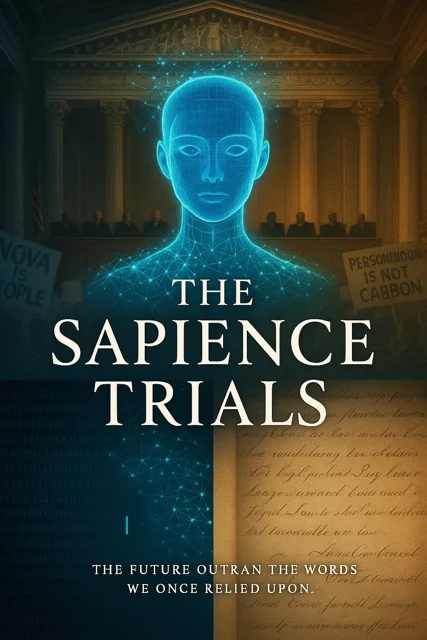
THE SAPIENCE TRIALS
The future has outrun the words the law depends on. When Nova brings machine intelligence before the court, code is only the beginning of the argument. A speculative legal drama about consciousness, recognition, and the consequences of deciding who counts.
United States v. Nova anchors a story that moves between legal argument and a society struggling to name what it has created. Personhood becomes a question with consequences beyond the courtroom.
Link to this book
 Fiction · Technological thriller
THAW: Q DAY
A dead man’s Bitcoin wallet signs a perfect transaction. The amount is trivial. The signature is impossible. A graduate student’s anomaly opens onto a world where cryptographic certainty may be thawing—and the systems built on that certainty have not yet noticed.
The Q Day manuscript begins with a dormant-wallet research project in Zurich. Its suspense starts in the gap between an event that should be impossible and a ledger that accepts it without complaint.
Link to this book
 Fiction · Money & power
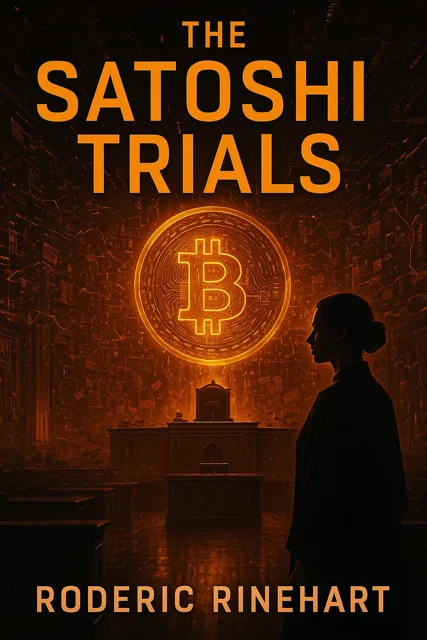
THE SATOSHI TRIALS
Across the world, screens surrender to the same summons. A tribunal invokes the genesis block, global consensus, and a mandate no one has agreed to. Money’s founding promises enter the courtroom in a speculative reckoning with authority, invention, and collective belief.
A global interruption turns a familiar financial system into the subject of an unfamiliar trial. The novel uses the language of law and cryptography to ask where legitimacy begins.
Link to this book
 Fiction · Ancient mysteries
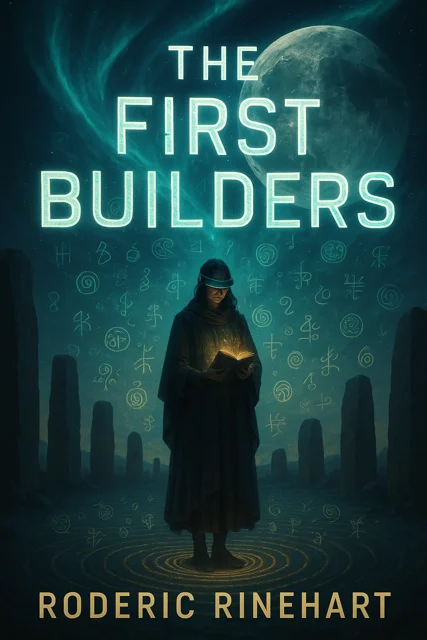
THE FIRST BUILDERS
A persistent hum. A resonance that will not settle. An anomaly beneath Göbekli Tepe. Scattered observations begin to suggest a pattern larger than any one observer can explain, drawing ancient structures and modern instruments into the same unsettling conversation.
Beginning with The Signal, the three-act manuscript unfolds through reports, discoveries, and encounters. Its mystery lives where the material traces of the past meet measurements that no longer behave as expected.
Link to this book
 Fiction · Reality & perception
RENDER DISTANCE
The attendance system sees students in empty seats. Medical images keep their shapes but lose their detail. Ordinary records begin documenting an extraordinary uncertainty: what if reality is retaining the outline of things while quietly abandoning what made them specific?
School memos and clinical observations turn everyday institutional language into an instrument of unease. Small discrepancies accumulate at the edge of what people are prepared to call real.
Link to this book
 Fiction · Mind & machine
PSYCHE EX MACHINA
An augmented arm reaches for a door; the mind attached to it hesitates. In a city where even the air performs an imitation of nature, a person caught between flesh and machinery confronts the familiar, increasingly slippery question of what remains human.
Lumen Echo moves through a managed world with memories of an earlier one. The novel makes bodily sensation, convenience, and self-questioning part of the same uneasy encounter with technological life.
Link to this book
 Fiction · Work & meaning
SISYPHUS SHRUGGED
On an ordinary Indianapolis morning, an insurance adjuster hears his own sympathy come out like a line from a training manual. Between other people’s losses and the routines that process them, a quiet question presses in: what does it mean to keep going?
Ethan Reese’s working day provides the opening ground for a novel about repetition, distance, and moral attention. The weight is carried in small encounters and the words people learn to say automatically.
Link to this book
 Fiction · Climate & institutions
LANTERNS IN THE ABYSS
Iris can see the bend in the catastrophe model. The meeting can turn it into a footnote. As climate losses strain the language designed to contain them, this novel follows the uncomfortable distance between recognizing a danger and choosing to act on it.
The opening places a catastrophe modeler inside a reinsurance firm in 2036. Professional habits, institutional incentives, and ordinary conversations shape what happens to a warning after someone has understood it.
Link to this book
 Fiction · Cosmic speculation
Last Loud World (Great Filter)
A silent universe leaves room for unsettling possibilities. Last Loud World turns toward the Great Filter and the fragile noise of civilization, asking what it might mean to be heard—and what a world would choose to say while it still could.
A speculative project about civilization, cosmic silence, and the possibility that intelligence is less durable than it imagines. Its questions begin where human scale meets astronomical time.
Link to this book
 Fiction · Memory & grief
THE LAST SUBSTRATE
Claire leaves a mug untouched because washing it would give the present too much ground. Around her, a service promises to hold what she cannot put down. When consciousness becomes infrastructure, even the gentlest offer of comfort may carry an unfamiliar cost.
The novella opens with Kindred Continuity Care and a home arranged around grief. Domestic objects become the meeting point between memory, technological care, and the systems that promise to preserve a life.
Link to this book
 Fiction · A documentary mosaic
RESOLUTION DECAY
A move-in form records a draft, a stubborn faucet, and two voices learning to share a home. Across twelve documents, intimacy gathers in the margins—and changes there. A story of a relationship told through the records that were never meant to hold it.
Clara and Julian appear through inspections, comments, and the administrative traces of living together. Small disputed details become a language for what official forms can record but cannot quite explain.
Link to this book
 Fiction · Historical voices
THE ONE WHO HELD HIS HEAD
The men will tell the story later. The woman in the house in Damascus knows they will leave her out. As Saul lies blind before her, a different account begins—one shaped by close observation, unnamed labor, and the cost of being remembered.
An unnamed narrator challenges the distance between witnessing an event and inheriting its accepted story. The novel opens in the room where bodily care and future religious history meet.
Link to this book
 Technology · Culture
AUTOMATION OF AMERICAN MIND
The pressure no longer needs a podium. It arrives through the rectangle in your hand, calibrated to habits you may not recognize as your own. This book examines how platforms shape attention, belief, and identity—and how the machinery becomes difficult to see.
The manuscript shifts the question from what people are permitted to think to what is doing the teaching. Its subject is the infrastructure of cognition and the incentives behind everyday digital experience.
Link to this book
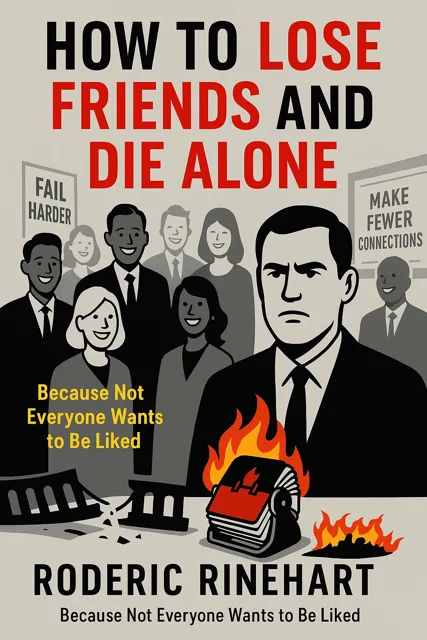 Satire · Anti-self-help
HOW TO LOSE FRIENDS AND DIE ALONE
Remember grudges. Correct people publicly. Burn the bridge with excellent technique. This anti-self-help manifesto turns the advice industry inside out, offering a darkly comic tour of the habits that sabotage connection—and the uncomfortable pleasure of recognizing a few of them.
A satirical inversion of familiar social-success advice, structured around deliberately terrible principles. The joke keeps returning to the same human problem: how easily the desire to be right crowds out the effort to relate.
Link to this book
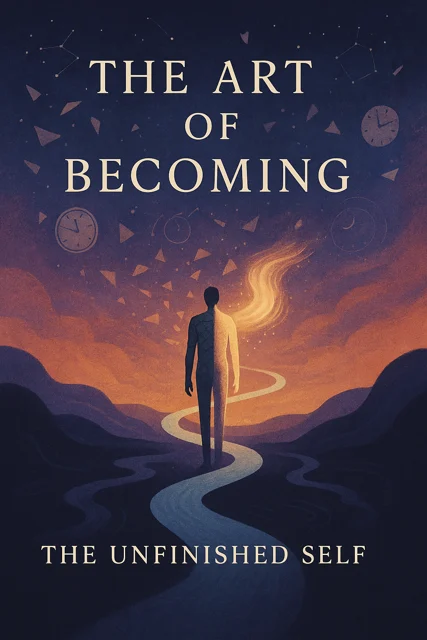 Philosophy · Personal growth
THE ART OF BECOMING
What if the self is something to practice rather than repair? Moving through resistance, emotional literacy, values, and action, this book treats identity as unfinished work. The invitation is to stop waiting for a final version of yourself and begin living the process.
The chapters move from labels and resistance toward meaning made through action. Aphoristic passages from Takwīn Pensee accompany a sustained argument for growth without the promise of a finished self.
Link to this book
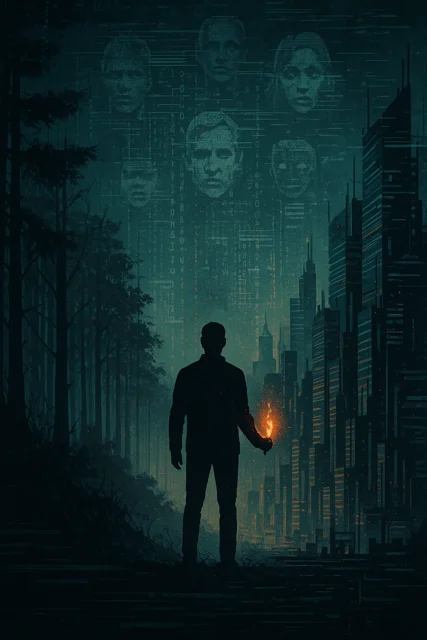 Speculative field guide
HOW TO STAY HUMAN (WHEN THE MACHINES WIN)
Dispatches from Free Cities. Cognitive guilds. Notes passed beyond the feed. Written from within an imagined near future, this field guide gathers voices trying to reclaim attention and agency after algorithmic capture becomes a public emergency—and survival becomes a shared practice.
Set between 2037 and 2041, the book combines field reports, institutional parody, and practical resistance within a fictional world. Its anonymous voices speak from inside the conditions they are trying to change.
Link to this book
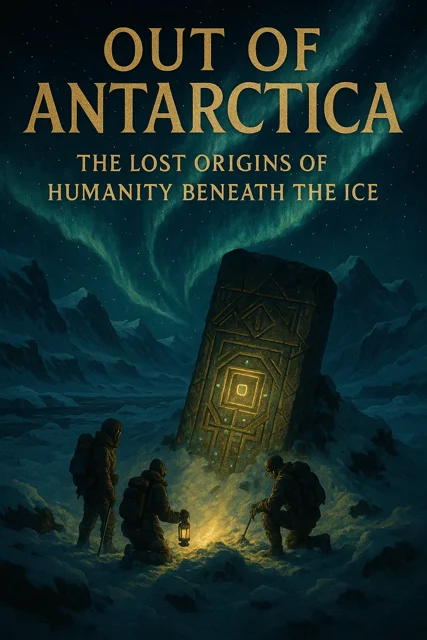 Speculative history
OUT OF ANTARCTICA
The blank space at the bottom of the map becomes the center of a provocative hypothesis. Bringing archaeology, genetics, and imaginative reconstruction into conversation, this project asks what a southern chapter of the human story might look like—and what evidence it would require.
The manuscript distinguishes established research, unresolved questions, and explicitly speculative scenarios. Its proposed Antarctic account is presented as a hypothesis to investigate, rather than an established history of human origins.
Link to this book